Engineering Notes
Safety note. These are notes from one person’s DIY build. They are not an engineering analysis or a safety certification, and nothing here says a load-bearing design is safe for you. If you build something similar, test the fit and the load carefully and get advice from someone qualified in harness and load-bearing hardware.
Floor-tom resonance and cymbal brackets
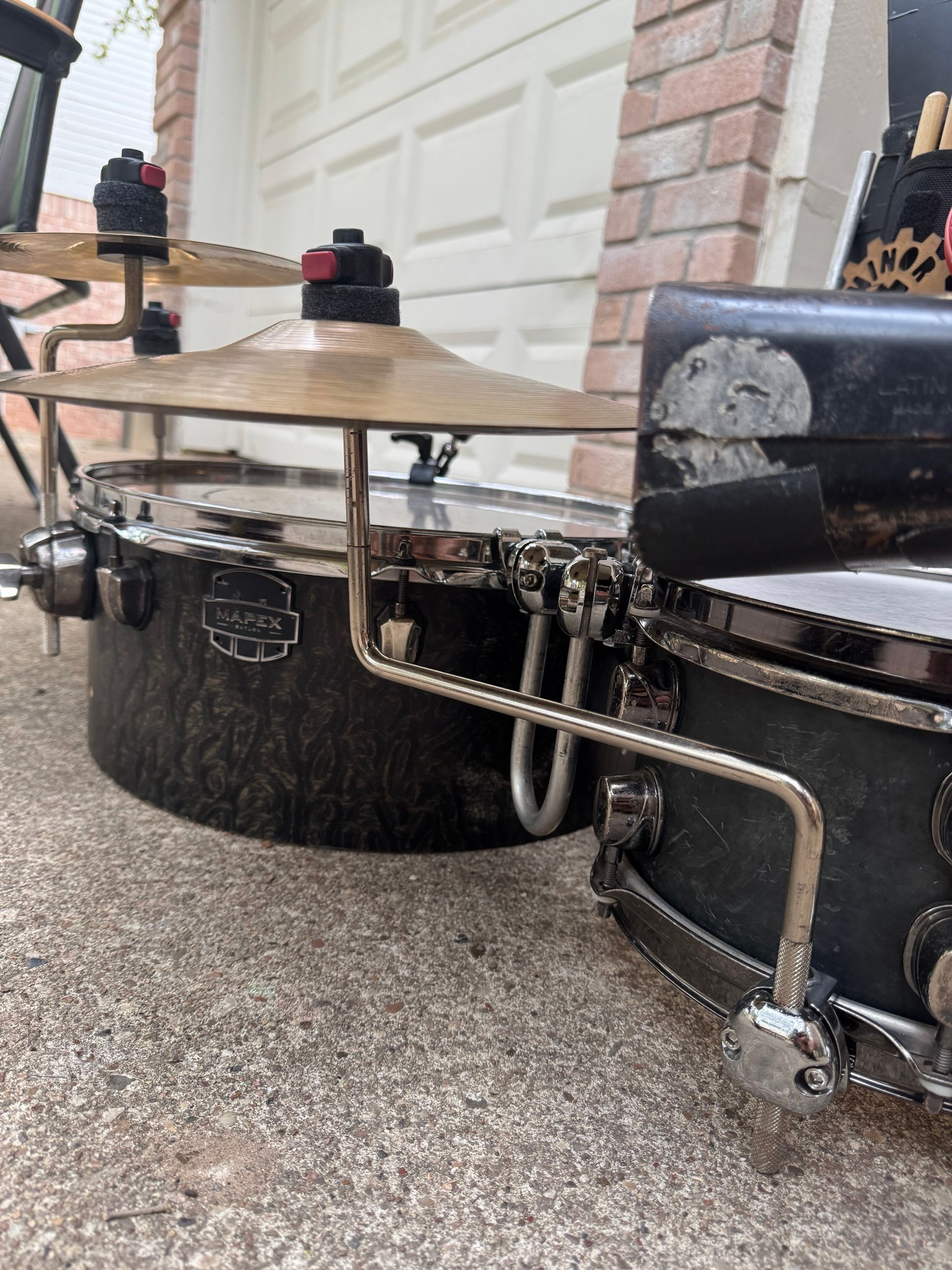
The floor tom plays the bass voice, so its low end matters. Extra brackets clamped to the floor-tom shell held back the low-end resonance I wanted. For that reason, the cymbal hardware on the floor-tom side does not use an extra clamp or bracket on the shell.
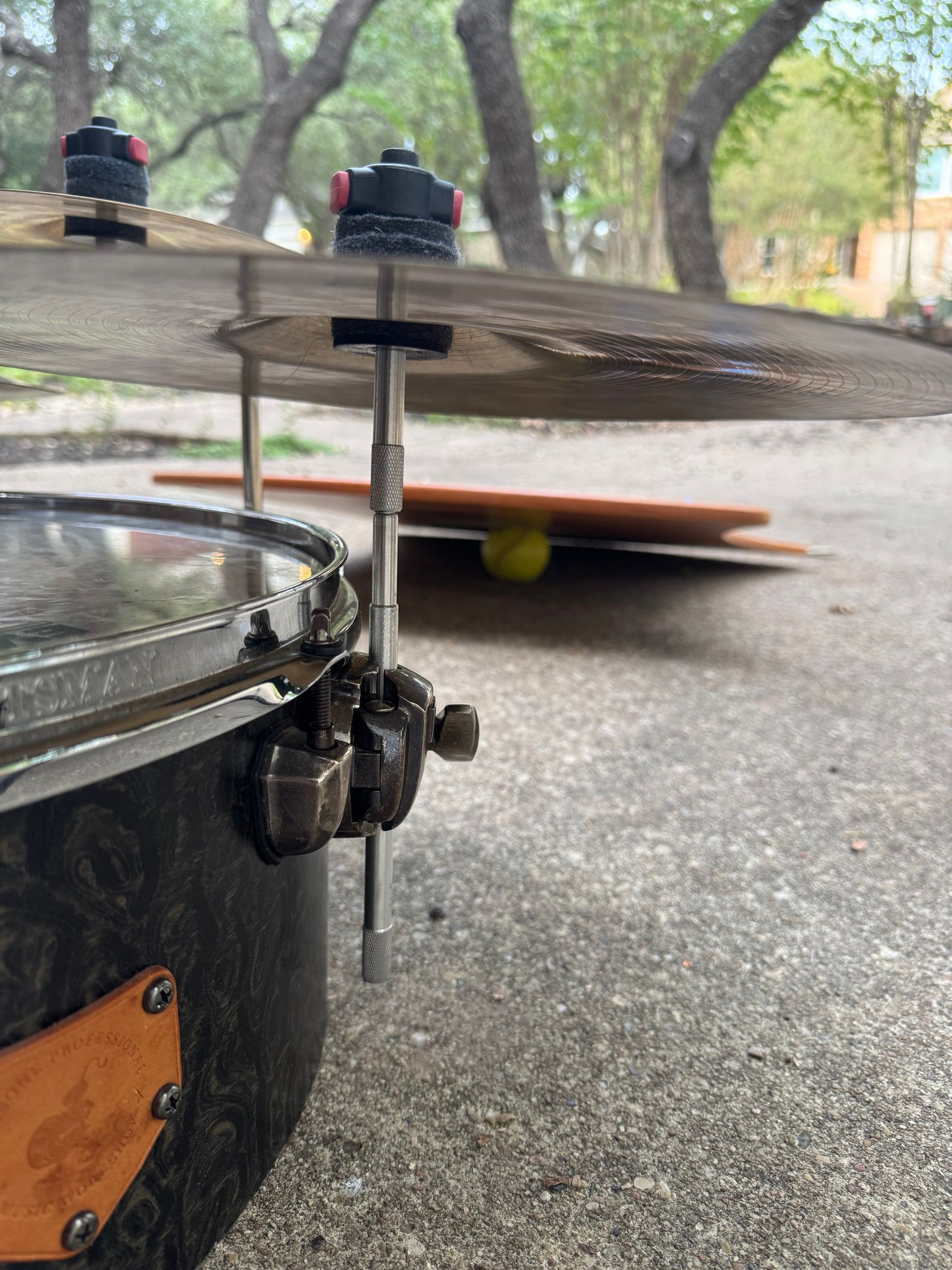
Instead, I relocated the floor tom’s original leg mounting holes, and those positions now hold cymbal hardware. Where the holes go depends on where each player wants their cymbals to sit, so this site gives no drilling instructions.
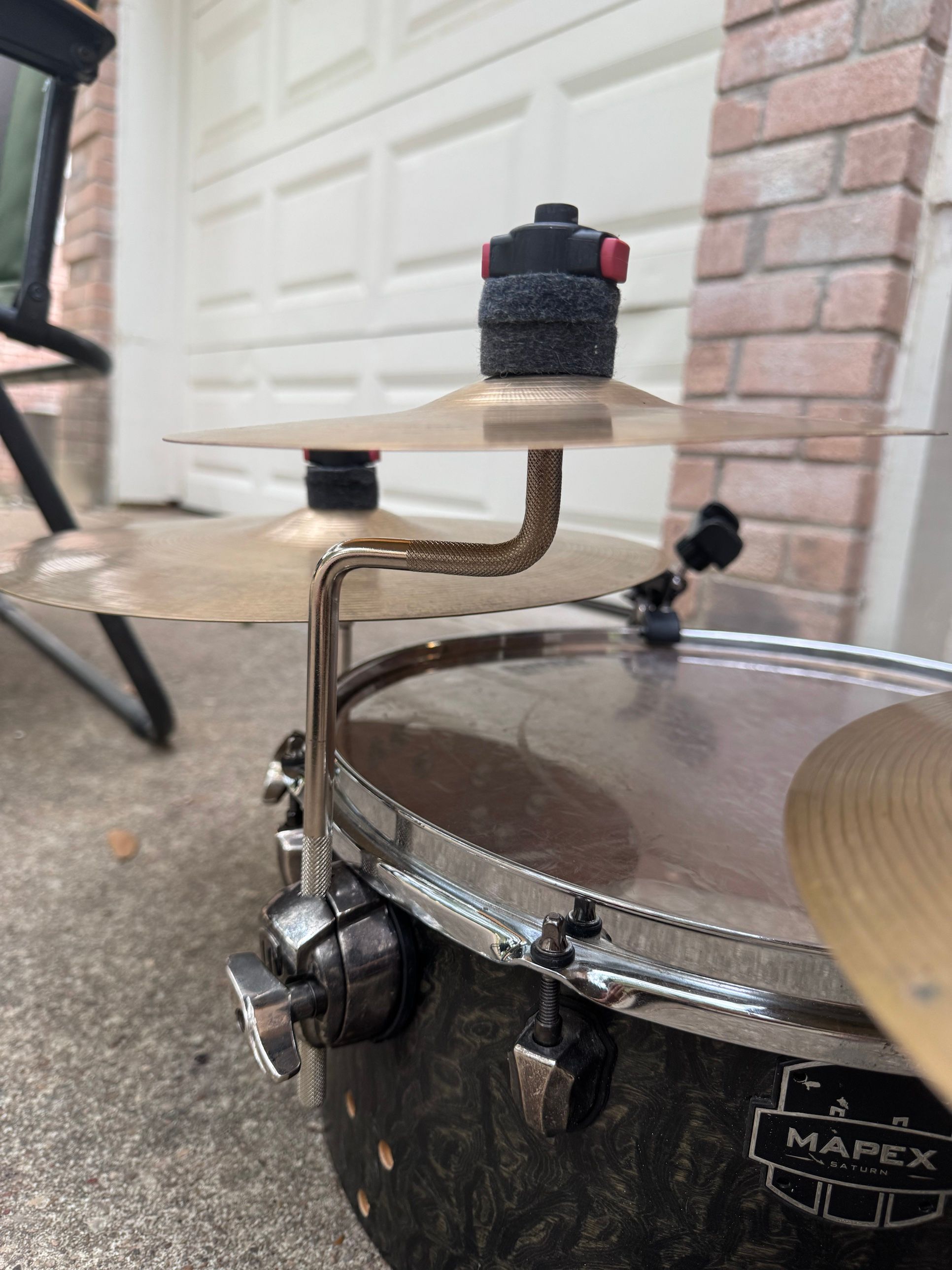
The center hi-hat hangs from a bracket mounted on the snare. That is acceptable on this kit because the snare is tuned high. It is a practical observation about this kit, not proof that brackets never affect a snare.
Left/right balance with two luggage scales
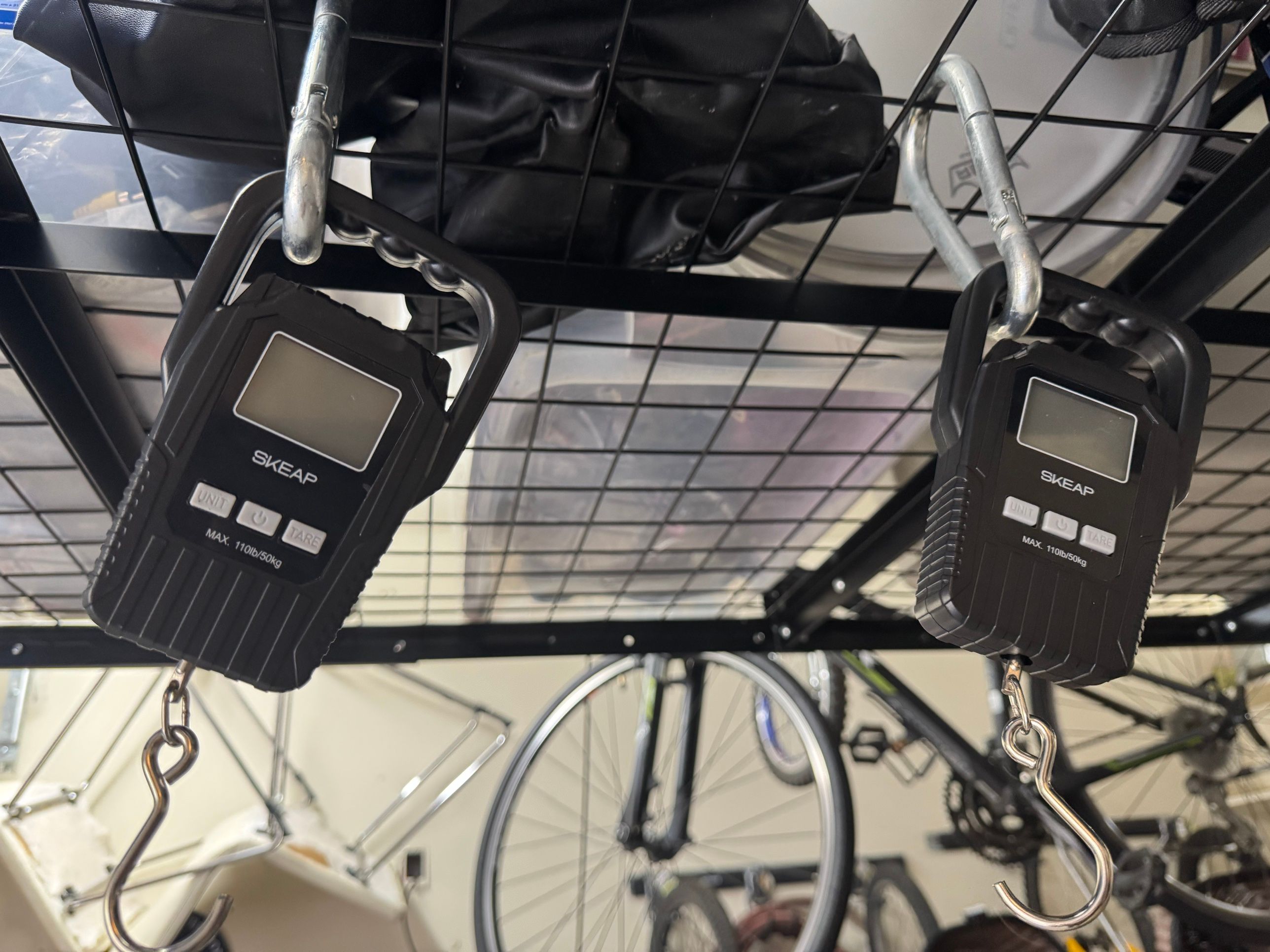
An unevenly loaded rig causes real discomfort and strain when you wear it. To check balance, I hang the harness and put one digital luggage scale on each side, then move hardware until the two readings are close.
In one measured suspended configuration, each scale read about 6.5 kg, roughly 13 kg in total. That is not a second weight figure for the kit. The fully configured kit is reported at about 38 lb / 17 kg.
Replacing the REMO harness rods
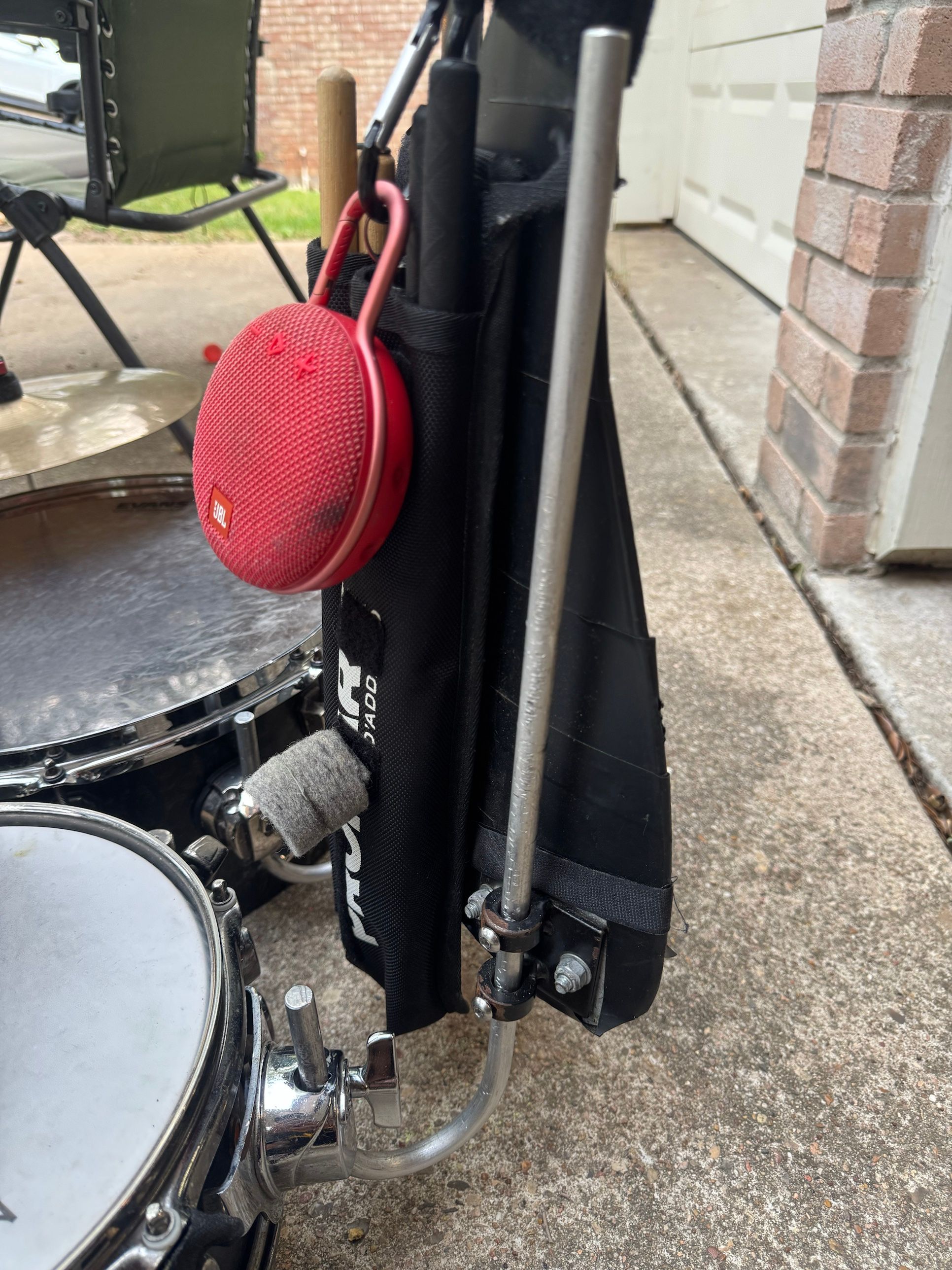
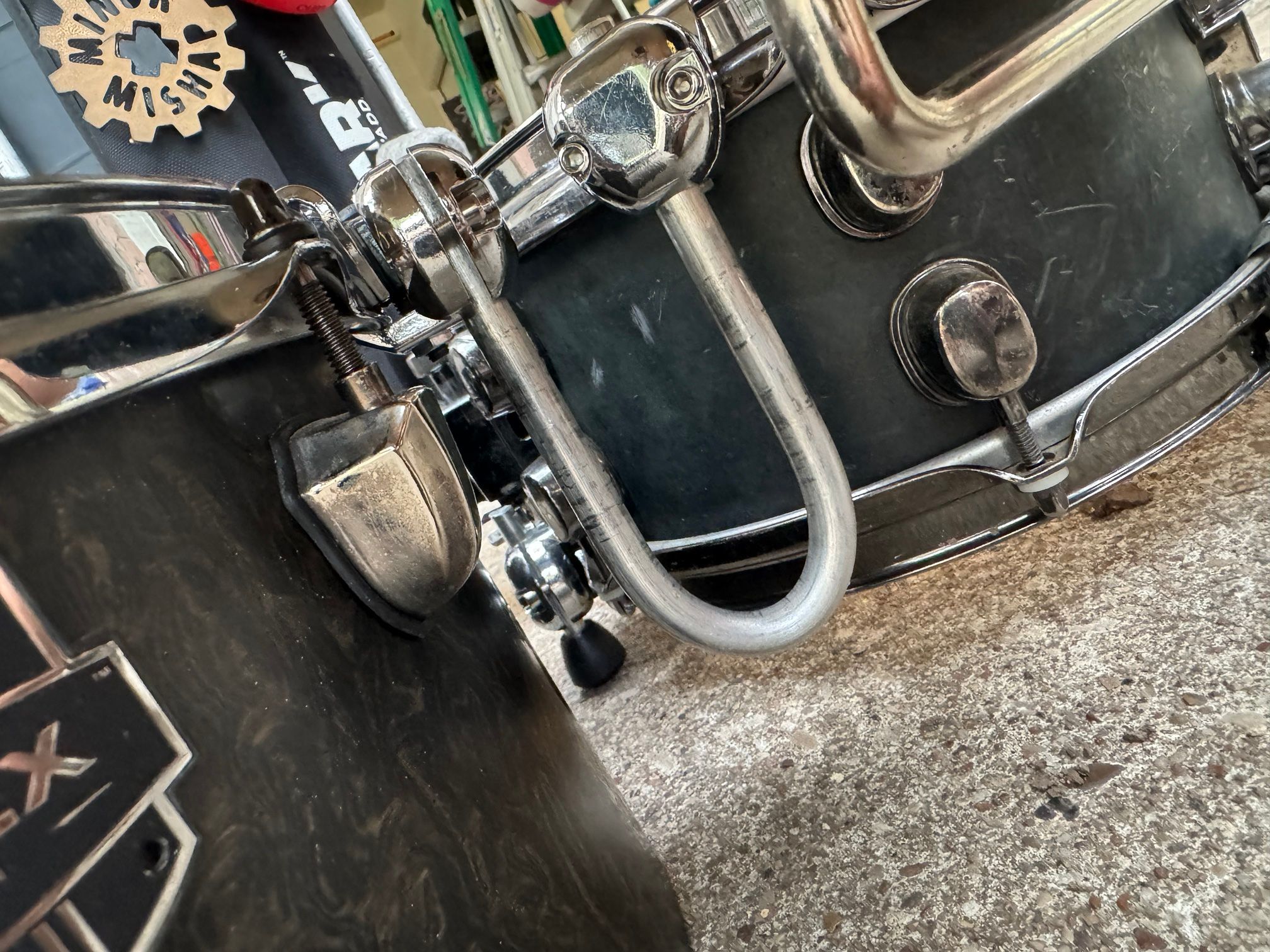
The harness is a silver REMO USA marching snare harness. Its original carrier rods do not fit drum-set mounting holders, so the stock rods are not compatible with this build. Chalo Colina made replacement carrier rods from 7/16-inch aluminum rod. Chalo also made the U-shaped rod that connects the snare and the floor tom, from the same 7/16-inch aluminum rod, based on an idea by James Hsu.
The rod lengths, bend radius and angles, how the rod ends are fixed, and how much load they can take are not documented.